



Have you noticed your toilet seat turning yellow and making your toilet look dirty, even after a thorough clean? This happens in most households, yet few people really know where the yellowing comes from. In this article, we explain the real reasons behind the problem and, above all, how to put an end to it once and for all.
Why your toilet seat turns yellow over time
A toilet seat doesn’t turn yellow overnight. It’s a gradual process that can have several causes. And most of the time, it isn’t just a question of cleanliness.
The original material plays a direct role
Most toilet seats sold in supermarkets are made from low-end plastic, often thermoplastic or poor-quality polypropylene. These materials react badly to prolonged contact with moisture, heat and cleaning products. After a few months, the surface starts to dull, then turns visibly yellow. This type of plastic also absorbs the pigments found in urine, limescale or chemicals, which makes the discolouration even worse.
Urine, a common but often underestimated cause
A toilet seat yellowed by urine is a very common case, especially in households with children or heavy use. Splashes, even tiny ones, build up on the underside of the seat and around the hinges. If they aren’t cleaned quickly, they leave stubborn yellow marks that soak into the material. The more porous the seat, the faster the problem sets in.

Harsh cleaning products
Paradoxically, trying too hard to clean can speed up the yellowing. Bleach, for example, is often used to whiten toilets. But applied regularly to a plastic seat, it attacks the surface layer and causes irreversible chemical yellowing. Highly concentrated descaling sprays have the same effect on some materials. Use after use, the surface loses its shine and takes on that characteristic yellowish tint.
Moisture and poor ventilation
Toilets are, by nature, damp rooms. When ventilation is poor, moisture lingers and encourages deposits on every surface, including the toilet seat. This permanent damp film ends up altering the colour, especially on white or light-coloured models. That’s why seats fitted in toilets with no window or extractor fan often turn yellow faster than others.
My toilet seat is yellow: what can I actually do?
If your yellowed toilet seat won’t come clean with regular cleaning, chances are the problem lies in the material itself. In that case, scrubbing harder or switching products won’t change a thing. The yellowing is built into the material, and no household trick can reverse the chemical breakdown of plastic.
Before you keep at it, try a simple test: clean a small area with baking soda and a microfibre cloth. If the yellow fades noticeably, it’s only on the surface. If the colour doesn’t budge or comes back the next day, the material is affected deep down and it’s time to move on.
Choosing a toilet seat that won't turn yellow: the Papado solution
Rather than replacing a poor-quality seat with another of the same kind, it’s better to invest in a model designed to last. That’s exactly what Papado offers with its toilet seat kit, designed to prevent yellowing problems in the long term.
Yellowing-resistant materials
Papado toilet seats are made from high-quality materials, chosen for their resistance to moisture, cleaning products and UV light. Unlike standard plastics, their surface stays smooth and even over time. The surface treatment stops pigments from soaking into the material, which prevents the yellowing seen on standard seats after a few months of use.

Easy cleaning with the right wipes
To keep your toilet seat clean without damaging it, Papado also offers wipes specially designed for cleaning its toilet seats. They remove everyday marks without attacking the surface. A quick wipe after each use, or once a day, is all it takes to keep a white, spotless seat with no effort. No more intensive scrubbing sessions with products that do more harm than good.
A toilet seat that stays white, even after years
The real advantage of a Papado toilet seat is that yellowing is no longer an issue after six months. User feedback confirms that the colour stays stable over time, even with intensive daily use. It’s an investment that saves you buying a new seat every year or two, as is often the case with entry-level models.
Yellowed toilet seat: bad habits to avoid
Apart from the choice of material, some everyday habits speed up yellowing without you even realising. Here are the most common:
- using neat bleach directly on the seat, which attacks the surface and causes chemical yellowing
- letting splashes dry without cleaning them, especially under the seat and around the fixings
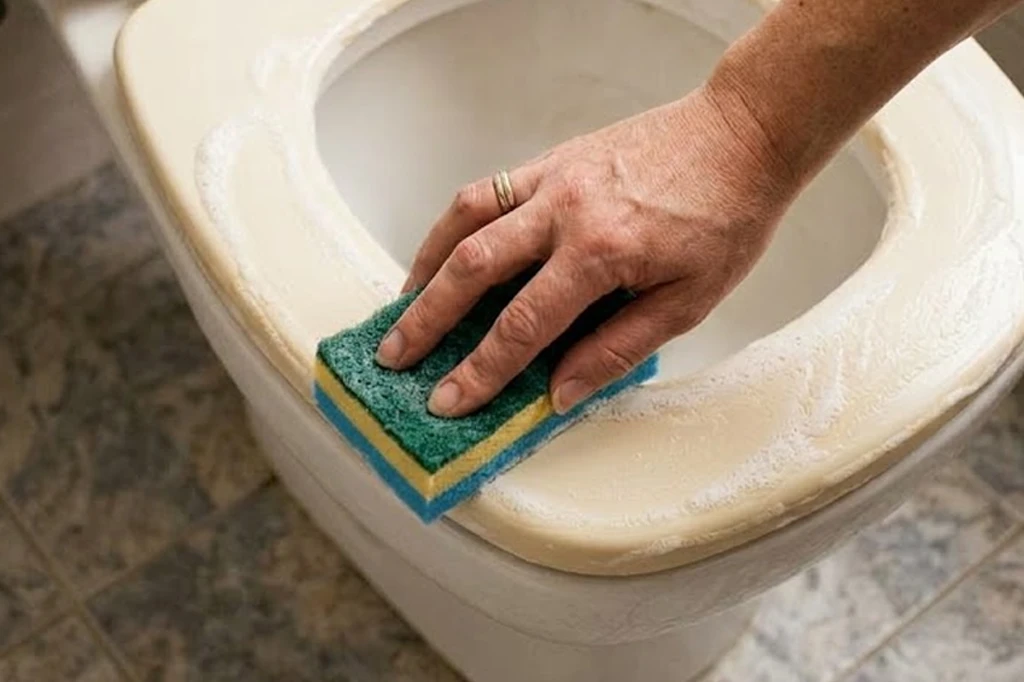
- using abrasive sponges or hard brushes, which create micro-scratches where dirt gets trapped
- never drying the seat after cleaning, which encourages moisture marks
How to clean your toilet seat properly so it stays white
The right care makes all the difference. The idea isn’t to spend hours scrubbing, but to get into good habits from the start.
Start with a gentle clean once or twice a week using a microfibre cloth and a little soap. Focus on the underside of the seat, its inner edge and the areas around the hinges: that’s where yellow appears first. Dry thoroughly after each clean so moisture doesn’t settle in.
Avoid overly strong products and opt for gentle solutions, such as baking soda diluted in lukewarm water, if you need a deeper clean. And if you’re looking for a quick, effective method, read our full article on a thorough toilet clean in under 5 minutes with the Papado tip.
When should you really replace your toilet seat?
If your toilet seat stays yellow despite regular cleaning and the colour doesn’t come back after several attempts, replacing it becomes the only sensible option. A seat that is yellowed deep down will never recover its original colour, whatever method you use.
On average, a standard plastic toilet seat starts showing signs of yellowing after 12 to 18 months of use. Quality duroplast or resin models generally last much longer, sometimes several years, with no visible change in colour. The material you choose when buying therefore directly determines how long your seat will keep looking good.
A yellow toilet seat is not inevitable. By choosing a model made from durable materials and adopting the right care routine, you can keep your toilet spotless for years. If your current seat has already turned yellow and cleaning no longer works, now is probably the right time to switch to a model built to stand the test of time.