A toilet that runs constantly is that continuous trickling sound that you eventually stop noticing… until the water bill arrives. And that’s when the shock really hits home. Between waste and unnecessary expenditure, an ignored toilet leak can cost you far more than you might imagine. Here’s what you need to know, and, most importantly, how to put a stop to it.
A running toilet: the figures that make you cringe
We tend to downplay the problem. A small trickle of water in the toilet bowl, a faint background noise… it seems harmless. Yet the figures speak for themselves:
- According to the CIEAU (Water Information Centre), a toilet cistern that leaks continuously wastes up to 25 litres per hour, or 600 litres per day. Over the course of a year, this amounts to 220 m³ of wasted water, equivalent to the annual consumption of an entire household.
- Financially speaking, with an average water price of €4 per m³, this type of leak adds €880 to your bill each year. And this is for a leak that is often invisible to the naked eye.
- Even a more subtle leak, a mere trickle, results in between 60 and 120 litres being wasted per day, representing an estimated annual extra cost of between €135 and €600, depending on the rate of flow.
And that’s just the direct cost. You also need to factor in premature wear and tear on equipment, the risk of damp, and the environmental impact of water consumption skyrocketing for no reason.
This background noise, which you eventually stop noticing, can amount to several hundred euros on your annual bill. That’s reason enough to take swift action.
Why is your toilet cistern leaking?
Before looking for a solution, you first need to understand what is happening inside the cistern. A toilet that keeps running is usually caused by one of the following problems:
An incorrectly adjusted or damaged float
The float controls the water level in the cistern. If it is set too high, water overflows through the overflow pipe and runs continuously. If it is damaged, it no longer works properly and the inlet valve never shuts off.
A worn flush valve or seal
This is one of the most common causes. The flush valve (or bell seal) is responsible for keeping the water in the cistern between flushes. Over time, it becomes misshapen, calcified or torn. As a result, a trickle of water constantly escapes into the bowl.
A faulty float valve
If the float valve no longer shuts off the water supply properly, the cistern fills up continuously, which can lead to a constant flow through the overflow. This problem is often recognised by the sound of the cistern running even when the flush hasn’t been operated.
Limescale and build-up
In areas with hard water, limescale builds up quickly on all the cistern’s components. It blocks the mechanisms, damages the seals and eventually causes multiple leaks that are difficult to locate.
A cracked cistern or a damaged seal
Although rarer, it is possible that, in some cases, the leak originates from the cistern itself: a crack in the wall or a worn cistern-to-pan seal may allow water to escape without this being immediately apparent.

The Waterflush anti-leak toilet cistern: put an end to leaks once and for all
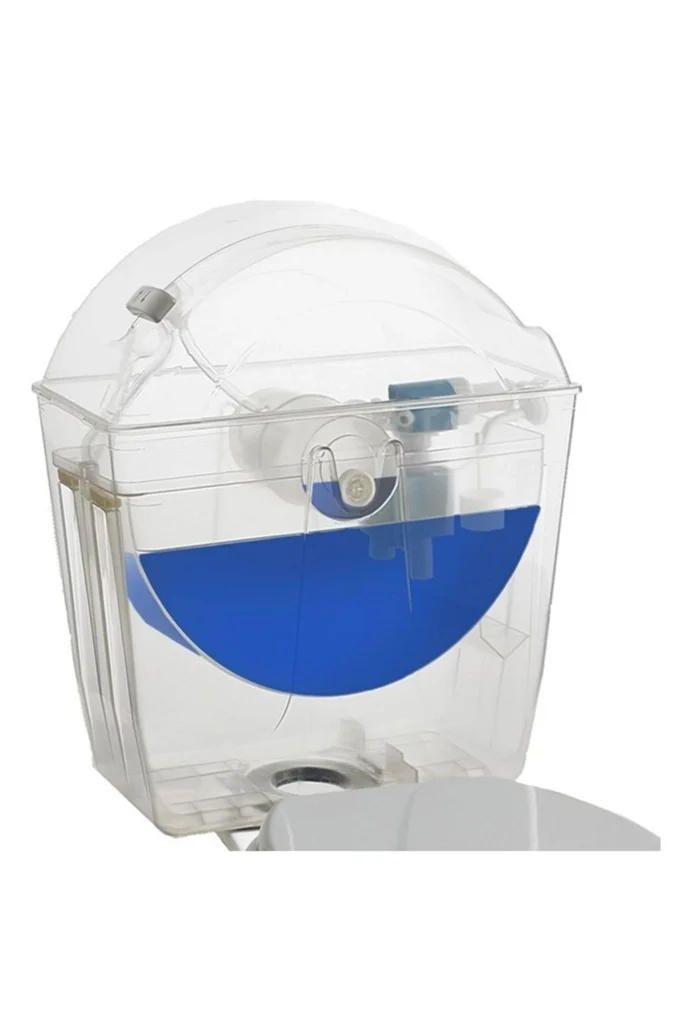
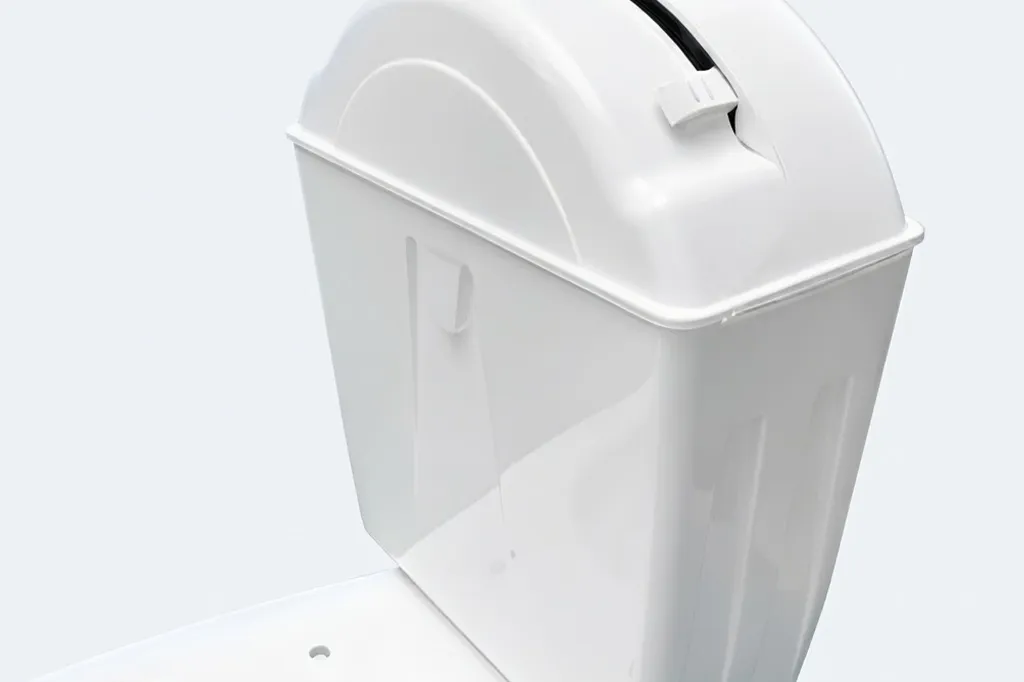
If you’re fed up with having to battle with your cistern every year, there’s a reliable alternative designed to last: Papado’s Waterflush leak-proof cistern.
Designed and manufactured in France, in Falaise, this toilet cistern is an exclusive product distributed solely by Papado. It has been designed to address the most common problems associated with conventional cisterns, using technology that eliminates the main sources of leakage right from the design stage.
What sets Waterflush apart
- Designed and manufactured in Falaise, using materials selected for their strength and durability.
- Available exclusively from Papado, which guarantees its quality and after-sales support.
- Gone are the days of the part most commonly responsible for leaks in conventional cisterns. The Waterflush is designed without this inherently faulty component.
- The durable materials and the design, which does not feature a bell-shaped seal, drastically reduce the risk of leakage.
- The Waterflush uses only the volume of water required for each flush, even with intensive use. The result is a reduction in water consumption of up to 40 per cent.
- The cistern is made from 100% recycled and recyclable ABS. The choice of material has been carefully considered to reduce the environmental footprint without compromising on strength.
- Installation is as straightforward as possible. The Waterflush is compatible with most toilet bowls on the market.
- This innovation has won an award – official recognition of the product’s quality and reliability.
In other words, whereas a conventional cistern requires regular maintenance and wastes hundreds of litres of water, the Waterflush is designed to operate sustainably, without the usual structural faults.
And what about the actual savings?
Toilets alone account for 20 to 30 per cent of domestic water consumption in France. A properly sized dual-flush system can reduce this consumption by up to 40 per cent, representing an annual saving of €80 to €120 on an average bill of €400.
The full range of Papado products, including their complete toilet packs, can be viewed directly on their website.
Why choose Papado?
Papado is not just another retailer. It is a company committed to manufacturing in France, with a genuine focus on sustainable quality and reducing consumption. Their page dedicated to ‘Made in France’ bears this out: every product is designed to last, is repairable, and is manufactured under traceable conditions.
Whereas many products reach their limits within a few years, Papado relies on robust and durable equipment.
A toilet that runs continuously is no minor issue. It means up to 150 litres of water wasted every day, over €230 a year, literally going down the drain. The causes are often the same: a faulty float, a worn valve, limescale or a faulty tap. One-off repairs may help, but they do not solve the underlying problem if the cistern itself is poorly designed.
Papado’s Waterflush anti-leak cistern offers a genuine solution to this recurring problem: made in France, with no bell-shaped seal, a cistern made from recycled ABS, water savings of up to 40 per cent, and simplified installation. It’s an investment that quickly pays for itself through savings on your water bill.
If your cistern is causing you recurring problems, now might be the time to consider a more reliable solution.