



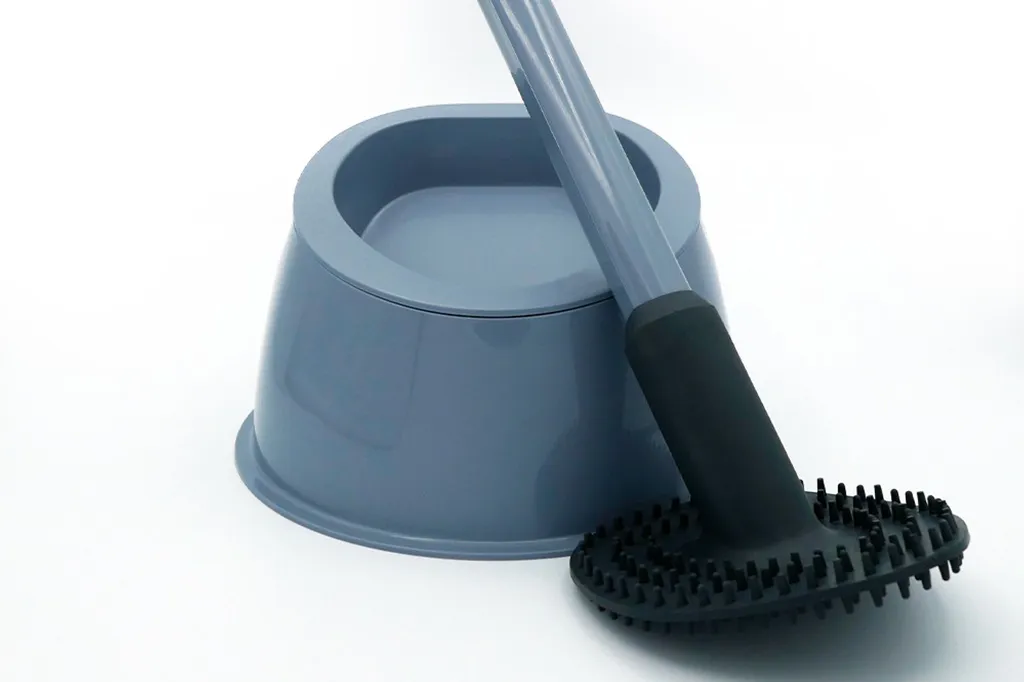
Let’s face it, the toilet brush is that thing nobody talks about but everyone uses (hoping nobody’s watching). For decades, we made do with the old synthetic brush, full of mysteries and bacteria. But ever since the silicone toilet brush made its way into our bathrooms, the game has changed. And the Papado toilet brush is pretty much the queen of the category. Here’s why.
The standard toilet brush: a breeding ground for bacteria
The classic synthetic toilet brush is often underestimated when it comes to hygiene. Yet its nylon bristles trap moisture, residue and bacteria for long periods. Between cleanings, the tool that is supposed to keep your toilet clean becomes a source of contamination in its own right.
And that’s not all. Those same bristles absorb water (and whatever else comes with it) every time you use them, then drip merrily into the brush holder. The result? A base filled with stagnant water, a rather… distinctive smell, and regular cleaning that you keep putting off because nobody wants to do it.
The lifespan of a synthetic toilet brush is estimated at just six months. This short replacement cycle is neither economical nor particularly environmentally friendly.
- Porous fibres that trap bacteria and moisture
- Stagnant water in the base → odours guaranteed
- Limited lifespan: needs replacing every 6 months
- Difficult to clean, or cleaning may be put off indefinitely
For a long time, synthetic toothbrushes were the default choice, due to a lack of truly satisfactory alternatives. More hygienic and sustainable options are now available.
The silicone toilet brush: the (clean) revolution in the bathroom
The silicone toilet brush is based on a simple principle: replacing porous, dirt-trapping nylon bristles with silicone nubs or bristles, a non-porous, heat-resistant, flexible and ultra-hygienic material.
What’s really changing (and not just a little)
1. Unrivalled hygiene
Silicone doesn’t absorb water. It doesn’t trap dirt between its bristles. After use, the brush drains quickly and dries in no time at all. Less moisture = fewer bacteria = fewer odours. It’s pure logic, and it feels good.
2. Cleaning the brush (at last) is bearable
Silicone is heat-resistant. You can therefore dip your brush into boiling soapy water for a thorough clean without having to touch it.
3. Far greater durability
Silicone does not degrade when exposed to water, household cleaning products or over time. In terms of longevity, the silicone brush proves to be far more economical: whilst a nylon brush needs replacing every six months, a good-quality silicone brush can last for several years. The only point to bear in mind is what happens at the end of its life: as silicone is not biodegradable, it must be disposed of at a recycling centre. This is a minor drawback when set against the significant reduction in waste generated.
4. A design that’s no longer an embarrassment
Manufacturers have also focused on the aesthetic aspect: most silicone brushes now feature understated designs and high-quality finishes, a far cry from the purely functional object that the traditional brush used to be.

Papado toilet brush: the very best in silicone, made in France
Of all the options available on the market, the Papado toilet brush stands out for reasons that go beyond mere marketing. Here’s what really sets it apart.
A product made in France
This is a rare selling point in this sector, and yet a decisive one. The Papado toilet brush is made in France, which allows for stricter quality control of materials and reduces the environmental footprint associated with transport. If you’d like to find out more about the brand’s ‘Made in France’ commitment, Papado explains its approach here. In a sector largely dominated by imports, the decision to manufacture locally remains an unusual approach, one that is consistent with standards of quality and transparency.
Materials designed to last
The silicone used by Papado is of superior quality: flexible, durable and non-porous. It does not yellow, warp or retain odours. The bristles are designed to reach into the nooks and crannies of the bowl without scratching the enamel or ceramic, a level of precision that matters when you’ve invested in a beautiful toilet.
A clean surface at last
One of the major problems with traditional toilet brushes is the holder. That little container that collects water, debris and all sorts of things we’d rather not think about. The Papado toilet brush features a ventilated holder that allows it to dry quickly and prevents the build-up of standing water. The holder can be placed on the floor or mounted on the wall. It is practical, discreet and, above all, clean.
Easier cleaning every day
The Papado’s silicone nubs do not trap toilet paper or waste. After use, simply rinsing it under running water is enough to keep it clean. For a thorough clean, leave it to soak in warm soapy water for about fifteen minutes. No unnecessary contact, no lingering odours.
What users are saying
Customer reviews highlight several key strengths: an intuitive design, a surface that stays clean between uses, impressive durability and a genuine appreciation for the product’s French origins. This consistent feedback is a testament to lasting satisfaction.
Comparison: traditional toilet brush vs Papado silicone toilet brush
| Criterion | Classic brush (synthetic) | Papado toilet brush (silicone) |
| Hygiene | Poor (porous bristles, stagnant water) | Excellent (quick drying, non-porous) |
| Lifespan | ~6 months | Several years |
| Brush cleaning | Difficult and not very effective | Easy (hot water or rinsing) |
| Manufacturing | Variable (often outside the EU) | Made in France |
| Holder | Closed base, stagnant water | Ventilated holder, floor or wall-mounted |
| Design | Basic, not very aesthetic | Modern and discreet |
| Average price | €3 to €10 | Higher investment, but cost-effective |
The purchase price should not be the only comparison criterion. In the long term, and taking hygiene requirements into account, the silicone brush is a better investment than its synthetic counterpart.

Is it really necessary to switch to a silicone toilet brush?
On vous entend déjà : “But my old plastic brush has been doing the job for years…” The synthetic brush does indeed fulfill a basic cleaning function. However, the evaluation criteria should not be limited to this single aspect: hygiene between uses, durability, and environmental impact are all factors that deserve to be taken into account.
Here are the good reasons to make the switch:
- You’re tired of cleaning the brush itself; with silicone, it’s so much easier.
- You like products that last, no need to replace a brush every 6 months.
- You care about what you buy. A French-made product with quality materials simply makes sense.
To discover the full range of available products, designed around a consistent philosophy: hygiene, durability, and French manufacturing.
Where can I buy the Papado silicone toilet brush?
No need to look any further. If you want to buy a silicone toilet brush and be sure you’re getting a quality product, made in France, with genuine customer support, head to the Papado website. Direct delivery, a guaranteed product, and the satisfaction of supporting a French brand that does things properly.
Changing your toilet brush is perhaps the least glamorous decision you’ll make this year. And yet, it’s one of the wisest. A silicone toilet brush, and the Papado in particular, means better hygiene, less maintenance, a longer lifespan and the pride of using a product made in France. For your toilet, for your peace of mind, and for the little satisfaction of knowing you’ve made the right choice. Even when it comes to a toilet brush.