



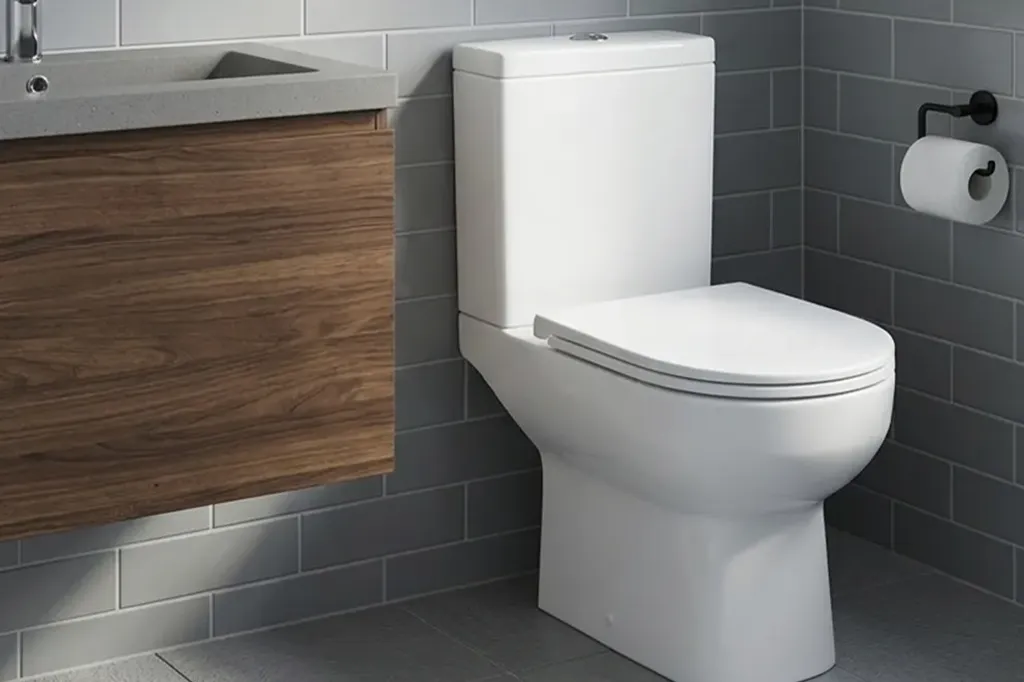
The toilet seat and flush handle are the parts of your toilet that get the most wear and tear. Yet we often wait until they’re completely beyond repair before doing anything about them. Here are 5 signs that indicate they need replacing, and how to sort it out quickly and hassle-free.
1. The toilet seat no longer stays open
When you lift the toilet seat and let go, it slams down. This is often the first sign that the seat hinges are worn out.
On newer models, the hinges are fitted with a soft-close mechanism that allows the seat to close slowly and quietly. When this mechanism fails, the seat slams shut, which can cause:
- Micro-cracks in the toilet seat
- Repetitive noise, which is particularly annoying at night
- A risk of pinching fingers, especially for children
If the hinges are sold separately and are compatible with your model, simply replacing them may be enough. But if the toilet seat itself is cracked or warped, it’s best to replace the whole unit at once.
Some toilet seats are fitted with specialised hinges that are difficult to find and rarely sold separately. In this case, replacing only the hinges quickly becomes a hassle and is not cost-effective in the long run.
Can you simply replace the hinges?
Sometimes yes, but some hinges are model-specific and cannot be found separately. In such cases, replacing the entire toilet seat is often the simplest and most cost-effective solution.
If you’re looking for a sturdy, stable and easy-to-clean toilet seat, Papado® clip-on seats are a good alternative to screw-on models. In just a few seconds, the seat clips off for quick and hassle-free cleaning.
2. Visible cracks or chips on the surface
A crack in the toilet bowl or seat isn’t just a matter of appearance. Above all, it’s a hygiene issue. Cracks, even superficial ones, become breeding grounds for bacteria, mould and organic residues. No household cleaning product can effectively clean a deeply damaged surface.
The most common materials used for toilet seats and lids are:
| Material | Durability | Susceptibility to cracking |
| Thermodur (urea-formaldehyde) | Average (5-8 years | Moderate, impact-resistant |
| Polypropylene (PP) | High (10-15 years) | Low, very robust |
| MDF / lacquered wood | Low resistance to moisture | High susceptibility to moisture |
If you notice chips on the edges, cracks around the fixings or a surface that feels ‘rough’ to the touch, don’t delay. A cracked toilet seat or rim can also cause injury when used, especially if a piece ends up breaking off.
How can you properly inspect your toilet bowl and seat?
Run your hand under the toilet seat and the rim. Look around the hinges, along the edges and underneath: these are the first places where cracks appear, and they’re often invisible when you’re just looking from above.

3. Yellowing or stains that cannot be removed
Over time, some toilet seats and lids may become discoloured, particularly entry-level models or those made from materials that are sensitive to harsh cleaning products, UV light or the wear and tear caused by repeated cleaning. This phenomenon depends mainly on the quality of manufacture and the treatment of the material.
Papado glasses and lids, made from polypropylene, have been specifically designed to withstand this type of discolouration over the long term. Polypropylene is a material renowned for its durability, resistance to moisture and ease of care. Unlike some lower-quality plastics, it does not yellow easily when used and cared for normally.
However, on older or lower-quality toilet seats and lids, the following may be observed:
- gradual yellowing,
- black stains around the hinges,
- stubborn marks under the rim,
- or lingering odours despite cleaning.
In this case, simply replacing the toilet seat and cistern is enough to ensure your toilet is clean, attractive and more pleasant to use on a day-to-day basis.
There are simple solutions available, such as the Papado® toilet seat and lid pack for a complete replacement, or the Papado toilet seat kit, which is perfect for replacing just the seat and lid.
4. A toilet seat that moves from side to side or no longer fits properly
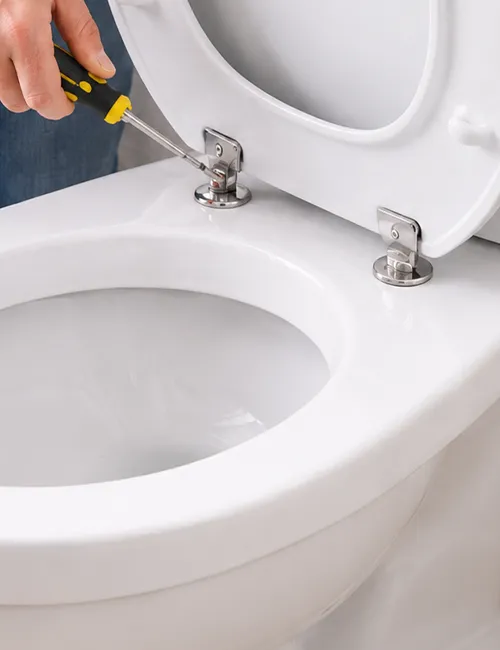
Do you sit on the toilet and find the seat slides to one side? This problem is more common than you might think, and is usually caused by loose or worn hinge fixings.
On most modern models, the hinges are screwed into two holes drilled into the ceramic of the toilet bowl. When the bolts come loose or the plastic caps wear out, the seat loses its lateral stability.
Identifying a problem with the scope mount
Before replacing the entire windscreen, check the following:
- Tighten the fixing bolts using a flat-head or Phillips screwdriver (access from above or below, depending on the model).
- Check the condition of the washers and plastic end caps. If they are flattened, they will no longer provide any cushioning.
- Check that the fixing holes in the ceramic are not chipped.
If the play persists after tightening, or if the fastenings are broken and cannot be replaced individually, the entire frame will need to be replaced. An unstable frame is not only uncomfortable, but also potentially dangerous for elderly people or those with reduced mobility.
5. The toilet seat and cistern are incompatible with your new toilet or an ongoing renovation
Have you just replaced your toilet bowl, refurbished your bathroom or moved into a new home? It is often the case that the existing toilet seat and lid do not match the shape, dimensions or style of the new installation.
The most common toilet bowl shapes are:
- Round: a compact bowl, often chosen for small spaces
- Elongated oval: a classic shape, more comfortable for adults
- Rectangular or ‘D-shape’: a contemporary design commonly found in modern bathrooms
A toilet seat that does not fit the shape of the bowl properly creates gaps that make cleaning difficult, leaves uncovered areas that are unhygienic and detracts from the overall appearance of the bathroom. A renovation provides the perfect opportunity to harmonise everything at once.
Why choose the PAPADO toilet seat and lid?
Whether you’re renovating or replacing your toilet bowl, Papado toilet seats and lids are a safe bet. They are compatible with the vast majority of toilet bowls on the market, available in two sizes (standard and wide), and come in a wide range of colours to suit any décor. One purchase is all it takes to bring everything together.
Before placing your order, you need to measure three dimensions of your toilet bowl: the width, the length and, most importantly, the width between the fixing points. A diagram is available directly on the product page to guide you.
Take action before the situation gets worse
A toilet seat or lid that slams, cracks, turns yellow, wobbles or no longer fits your toilet bowl can be easily sorted out. These five signs are all reasons to replace this everyday item without delay.
Both the toilet seat and the lid play a direct role in the comfort, hygiene and appearance of your bathroom. Neglecting them always ends up costing more than a simple preventative replacement.
Quick replacement, simplified maintenance, installation in just a few minutes: it’s always better to act in advance rather than wait for a breakdown. Find all the models suitable for your toilet bowl in the complete Papado range.